
A Small Neighborhood with a Big Sense of Place
Chermont is one of those Denver neighborhoods that can be easy to overlook if you are searching for grand landmarks or nationally recognized historic districts. Tucked into southeast Denver, it is better understood through its streets, homes, mature trees, and the everyday routines that have shaped it over generations.
Today, Chermont is generally associated with the 80237 area and the residential landscape near Quebec Street, Interstate 25, and the Denver Tech Center. Like many Denver neighborhoods, its boundaries can be described differently depending on whether one is looking at real-estate maps, neighborhood conversations, or city planning documents. That informality is part of its character: Chermont feels less like a sharply defined historic district and more like a recognizable local pocket with its own rhythm. ([homendo.com](https://homendo.com/places/usa/co/denver/80237/chermont-denver-co?utm_source=openai))
For longtime residents, the neighborhood’s appeal is familiar and enduring. There are quiet residential blocks, established landscaping, mid-century houses, and convenient connections to the larger city. It is a place where the history is not always announced with plaques. Instead, it lives in the shape of the streets and in homes that still reflect the era when southeast Denver was becoming a destination for postwar families.
Where the Name Comes From
The origin of the name *Chermont* is not clearly documented in the major public histories of Denver. That is worth acknowledging, because many neighborhood names in the city have well-recorded beginnings tied to developers, prominent residents, railroads, or annexed towns.
Chermont appears to be a local or real-estate-era name rather than one of Denver’s older incorporated communities. Online neighborhood references describe it as a southeast Denver area established during the late 1950s, when the city was expanding rapidly beyond its older central neighborhoods. ([homendo.com](https://homendo.com/places/usa/co/denver/80237/chermont-denver-co?utm_source=openai))
The name may have been influenced by nearby street names, subdivision marketing, or a planned residential development, but no authoritative source has established a definitive namesake. In that way, Chermont resembles other Denver micro-neighborhoods whose identities developed gradually through local use. Residents, builders, real-estate agents, and community institutions helped give the area a name—and eventually made that name feel permanent.
The Postwar Roots of Chermont
Chermont’s main period of growth came during a major transformation in Denver. After World War II, the city experienced rising demand for new housing, improved roads, automobiles, and family-oriented neighborhoods outside the historic urban core.
Southeast Denver was especially well suited to this expansion. The area offered room for detached houses, wider streets, driveways, and yards—features that were increasingly attractive to middle-class families in the 1950s and 1960s. The housing associated with Chermont reflects that era: ranch-style homes, split-levels, modest brick houses, and other practical designs intended for comfortable everyday living. ([homendo.com](https://homendo.com/places/usa/co/denver/80237/chermont-denver-co?utm_source=openai))
This was a different kind of Denver from the Victorian city found around Capitol Hill, Curtis Park, or Five Points. Chermont was shaped by postwar expectations rather than nineteenth-century streetcar urbanism. Homes were designed for privacy and convenience, while nearby roads made it easier to reach downtown, schools, shopping areas, and emerging employment centers.
The neighborhood’s development also coincided with the broader rise of southeast Denver institutions. The University of Denver, Washington Park, Virginia Village, University Hills, and the expanding commercial corridors along Colorado Boulevard and Evans Avenue all contributed to the growth of this part of the city.
Streets, Homes, and the Mid-Century Landscape
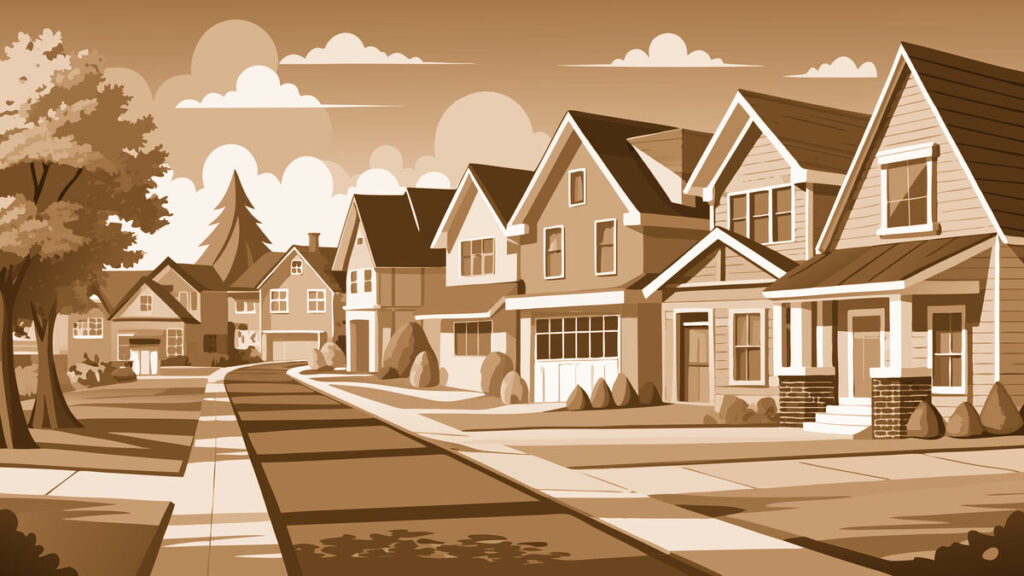
A walk through Chermont reveals the architectural language of postwar Denver. Many houses feature low rooflines, attached garages, broad front lawns, and simple floor plans organized around family life. Some have been carefully preserved, while others have gained additions, updated kitchens, new windows, or contemporary landscaping.
That mixture gives the neighborhood a layered appearance. A 1950s ranch may sit beside a fully remodeled home, while a later townhouse or apartment development occupies land that once held a single-family residence. These changes are not unusual; they are evidence of a neighborhood adapting to new generations.
Nearby Clermont Street is an important reference point for understanding southeast Denver’s broader heritage. The street is part of Denver’s historic street pattern and appears in preservation surveys documenting homes from the 1930s through the 1950s. Those records show how the larger area developed from early twentieth-century residences into the postwar housing landscape that defines much of southeast Denver today. ([denvergov.org](https://denvergov.org/files/assets/public/community-planning-and-development/documents/npi/near-southeast-area-plan/discover_denver_survey_report_virginia_village.pdf?utm_source=openai))
The similar-sounding names—Chermont and Clermont—can occasionally create confusion. Clermont Street, however, is an established Denver street with a much older history, including the National Register-listed Clermont Street Parkway in central-east Denver. That parkway dates to 1911 and reflects Denver’s City Beautiful movement, when landscaped boulevards were designed to connect neighborhoods, parks, and scenic viewpoints. ([npgallery.nps.gov](https://npgallery.nps.gov/AssetDetail/NRIS/86002215?utm_source=openai))
Parks and Nearby Places
Chermont’s story is also connected to the parks and public spaces of southeast Denver. Residents are within reach of several places that express the area’s changing history.
- James A. Bible Park offers open lawns, walking paths, sports fields, and access to the Cherry Creek corridor.
- Cook Park reflects the postwar expansion of southeast Denver and remains a gathering place for nearby residents.
- Washington Park provides one of the city’s most important historic landscapes, with gardens, lakes, recreation areas, and the landmark Washington Park Boathouse.
- Cranmer Park, farther north in Hilltop, is known for its mountain views and its relationship to Denver’s parkway tradition.
These parks help explain why residential neighborhoods like Chermont have remained attractive. They provide the green space that many postwar subdivisions were designed to complement, while also connecting residents to Denver’s older civic and landscape traditions.
How Chermont Has Changed
Over the decades, Chermont has moved from a newly built suburban-style neighborhood to an established urban community. The young families who arrived during the 1950s and 1960s gradually gave way to longtime homeowners, new buyers, renters, and people seeking proximity to the Denver Tech Center and central Denver.
The neighborhood has also seen the familiar pressures facing much of the city: rising property values, remodeling, redevelopment, traffic changes, and the gradual replacement of original landscaping. Some homes retain their mid-century appearance, while others have been enlarged or modernized.
Yet Chermont’s identity has not disappeared. Its strongest qualities remain remarkably consistent—quiet blocks, practical homes, mature trees, and a location that balances residential calm with access to employment, transportation, parks, and cultural institutions.
The Heritage of an Everyday Neighborhood
Chermont may not have a dramatic founding legend or a single celebrated landmark, but its heritage is meaningful precisely because it represents ordinary Denver life. Its history is the story of postwar growth, family housing, changing transportation patterns, and the steady work of residents who made a collection of homes feel like a community.
The neighborhood’s greatest historical value lies in that continuity. A ranch house, a shaded sidewalk, or a familiar view toward the Front Range can connect present-day Denver to the city of the 1950s. Chermont reminds us that heritage is not limited to grand buildings. Sometimes it is found in the places where generations have made dinner, walked the dog, watched children grow, and greeted neighbors from the front porch.